
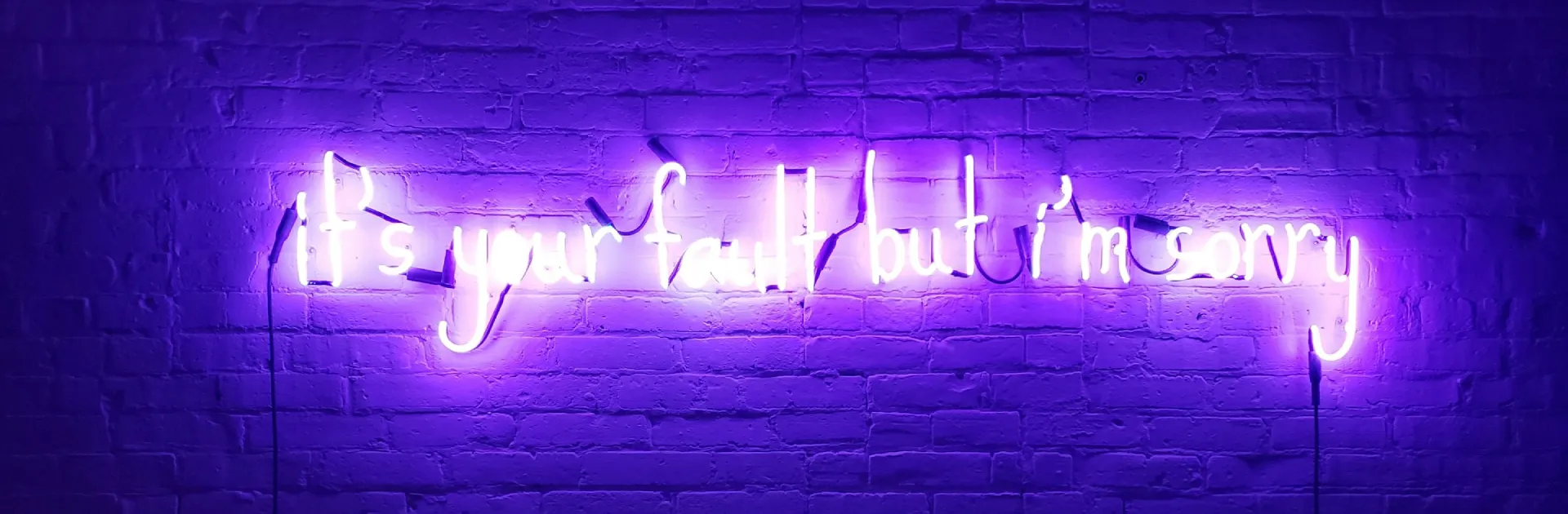
In many companies - and this applies to agencies just as much as to their clients - there is a culture of covering things up. Mistakes are kept quiet for as long as possible. Problems are played down. Responsibility is passed on. Why? Because sanctions may follow. Because people have to justify themselves. Because someone is looking for someone to blame instead of looking for a solution.
The result: processes are paralysed. Decisions take forever because everyone involved wants to protect themselves. And when something does happen, valuable time is lost - not on solving the problem, but on assigning blame.
At X-centives, we have consciously decided against this principle.
Solution before blame
We do not care who made a mistake. Truly. Not out of indifference, but out of pragmatism. The first question is never "Who did this?", but "How do we get this back under control?" Immediately. In real time. Without long discussions.
This only works when nobody has to be afraid of admitting something. When communication is open. When it is clear that we are all in the same boat - and if that boat has a leak, we fix it together before discussing who used the tool incorrectly.
That does not mean we ignore mistakes. Quite the opposite. After every event and after every critical situation, we sit down together and ask: How could this happen? What can we change so it does not happen again? Which process do we need to close this gap?
Our continuous improvement cycles, the four-eyes principle, internal review - none of this exists to find someone to blame, but to learn from mistakes. To get better. To reach the point where everything within our control actually runs as planned.
What we can control - and what we cannot
Through this culture, we have now reached a level of maturity where we can exclude practically everything unwanted from our planning processes. Almost everything. Because some things lie outside our control: the weather, a traffic jam after an accident on the motorway, suddenly rough seas.
But the same applies here: no panic, no blame, no paralysis. Instead: close coordination with the client, quick decisions and real-time corrections in the event flow. The catamaran cannot sail? Then we organise an alternative in the shortest possible time that fits just as well - or perhaps even better.
That only works when the team is not busy mistrusting each other. Instead, it supports each other. Kindly. Respectfully. At eye level. Without hierarchy theatre.
What this means for you
A culture of learning from mistakes is not a soft skill. It is a hard success factor. For us as an agency. And just as much for your company.
How does your team react when something goes wrong? Does it look for someone to blame - or for solutions? Do your employees dare to raise problems early? Or do they only become visible when it is already too late?
An open, fear-free communication culture determines how quickly you learn from mistakes. How agilely you can respond to change. And ultimately: how innovative and successful your company is.
At X-centives, we live this culture because we are convinced it delivers better results not only for us, but also for our clients. In the end, what matters is not whether something goes wrong. It is how you deal with it.